
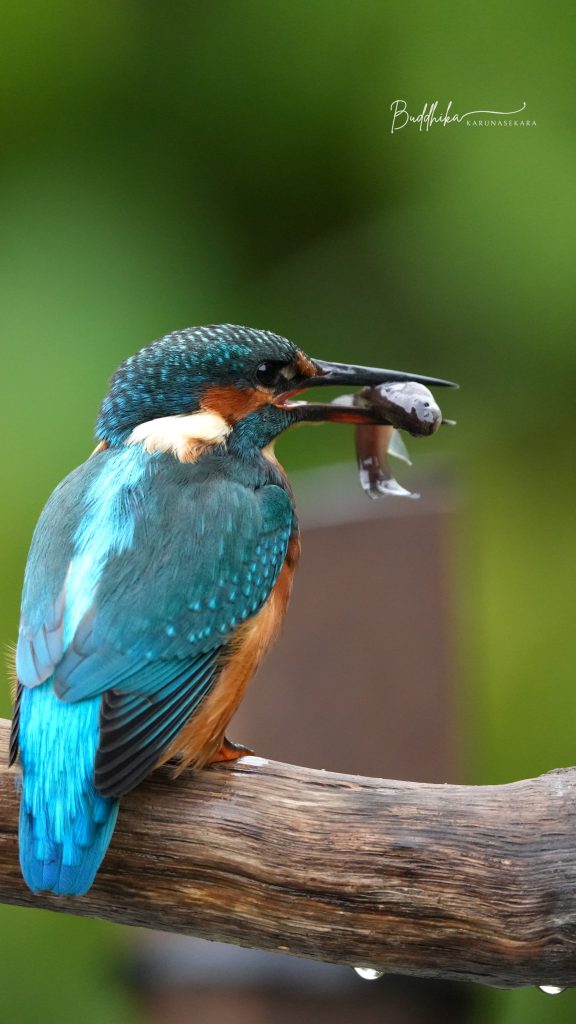
Kingfishers have long captured the imagination of people around the world, not only for their stunning plumage but also for the myriad of myths and legends surrounding these fascinating birds. In the UK, the common kingfisher (Alcedo atthis) is a beloved resident, known for its vibrant blue and orange feathers that flash like jewels in the sunlight.
These remarkable birds make their homes in burrows along riverbanks, digging tunnels up to three feet long. At the end of these tunnels, they lay clutches of nearly spherical eggs, typically around seven in number. Kingfishers are expert hunters, feeding primarily on small fish such as sticklebacks. They employ a unique hunting strategy, either hovering above the water or perching on a branch before plunging headfirst to seize their prey. Despite their bright colours, kingfishers can be surprisingly difficult to spot when perched, as they often choose shady spots along the water’s edge.
Once a kingfisher has caught its prey, it engages in a curious ritual. The bird will beat the fish against a branch to stun it, then skilfully juggle the fish until it is positioned head-first. This allows the kingfisher to swallow its catch without the fins getting caught in its throat. These birds have a voracious appetite, with each individual needing to consume its body weight in fish daily.
Throughout history, kingfishers have been the subject of numerous myths and legends. In ancient times, they were known as halcyons and were believed to possess the power to calm the sea. According to legend, kingfishers would build floating nests on the ocean’s surface during a period of winter calm. This belief gave rise to the phrase “halcyon days,” which has now come to symbolise a time of peace and happiness.
The kingfisher’s alleged supernatural powers were thought to persist even after death. Some believed that if a dead kingfisher was suspended by its feet, it would always rotate until its bill pointed in the direction of the wind. Others held that the bird’s plumage would remain in perfect condition, even after moulting each year. In his 12th-century “Topography of Ireland,” Welsh monk Giraldus Cambrensis noted that a dead kingfisher, which he referred to as a martinet, would never decay if kept in a dry place. He also claimed that when placed among clothes, the dead bird would infuse them with a pleasant scent and protect them from moths.
In certain regions of France, a myth persists that Noah sent out a kingfisher from the Ark along with a dove, as the kingfisher was well-acquainted with water. This tale further illustrates the enduring fascination humans have had with these colourful birds.
Despite their mythical status, kingfishers have faced real-world challenges. In the 19th century, trout fishery owners nearly drove the species to extinction in the UK, mistakenly believing that kingfishers posed a significant threat to their fish stocks. The 1566 Acte for the Preservation of Grayne also targeted kingfishers, confusing them with dippers, leading to bounties being paid for both species.
Today, the common kingfisher remains a cherished part of the UK’s avian community. While their numbers have recovered since the 19th century, these birds still face threats from habitat loss and pollution. By protecting the rivers and streams that kingfishers call home, we can ensure that future generations will continue to be enchanted by these mythical creatures and their colourful tales.