
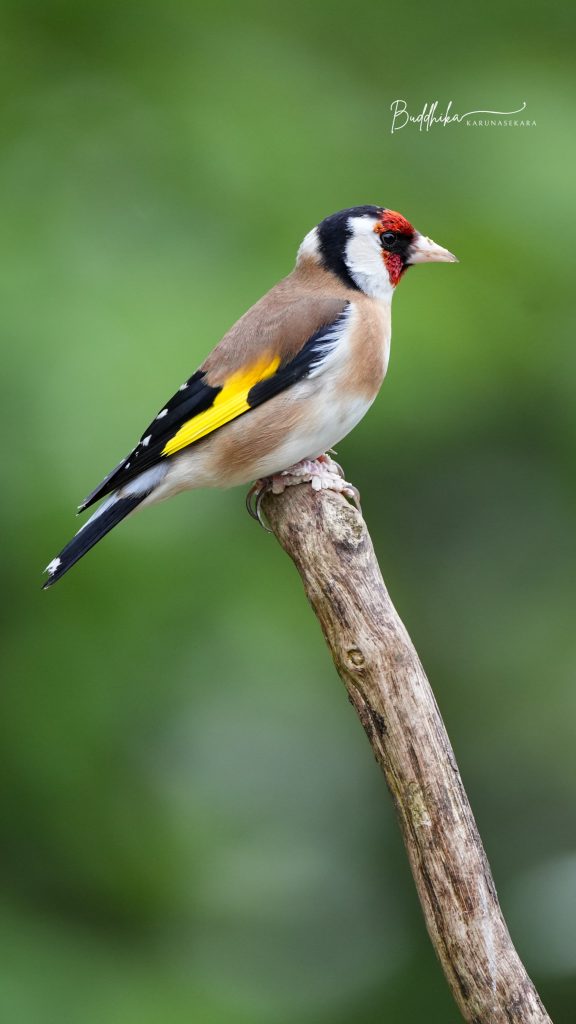
Flitting through gardens and woodlands, their wings a flutter of gold and black, European Goldfinches bring a dash of living colour to the landscape. These small yet striking birds have carved out an outsized presence in European culture, their vibrant plumage and melodious song inspiring tales and traditions for centuries.
From sun-dappled medieval tapestries to the canvases of Renaissance masters, the Goldfinch has nestled into the fabric of European folklore. Its striking appearance – a vivid red face framed by a golden flash on each wing – has sparked the imagination of storytellers, artists, and nature lovers alike.
In Christian symbolism, the Goldfinch holds a special place. Its red face is said to represent the blood of Christ, earned when a Goldfinch tried to remove the crown of thorns from Jesus’s head during the crucifixion. This association led to the bird’s frequent appearance in religious paintings of the Renaissance, often perched near the infant Christ or the Virgin Mary.
Celtic folklore paints the Goldfinch in a different light. Known as “An Lasair Choille” or “the flame of the forest” in Gaelic, the bird was seen as a bringer of good fortune. Its bright plumage was thought to ward off evil spirits and bring prosperity to those lucky enough to spot one.
In British folklore, the Goldfinch’s sweet song and colourful appearance made it a favourite among bird charmers and fortune tellers. The bird’s presence was said to foretell a marriage or the birth of a child, its golden wings carrying messages of joy.
Greek mythology tells us that the Goldfinch, once a plain bird, was gifted its vibrant colours by the gods as a reward for its beautiful song. This tale speaks to the bird’s enchanting voice, which has delighted listeners for centuries.
In some parts of Europe, particularly in rural areas, the Goldfinch was seen as a weather prophet. Its cheerful song was believed to herald the coming of spring, while its gathering in flocks signalled the approach of winter.
The Goldfinch also found its way into literature. In Charles Dickens’s “Barnaby Rudge”, the titular character’s pet Goldfinch, Grip, plays a pivotal role. The bird’s presence adds a touch of innocence and whimsy to the often dark narrative.
More recently, Donna Tartt’s Pulitzer Prize-winning novel “The Goldfinch” uses Carel Fabritius’s painting of the same name as a central motif, demonstrating the enduring fascination these birds hold for us.
In many European cultures, the Goldfinch symbolised endurance and resilience. Its ability to thrive on thistle seeds, which other birds avoid, was seen as a metaphor for finding sweetness in adversity.
Today, while we may be less inclined to see omens in birdsong, the European Goldfinch continues to charm and delight. Its presence in our gardens and woodlands serves as a living link to these old tales, a flash of gold reminding us of the rich tapestry of folklore that surrounds us.