
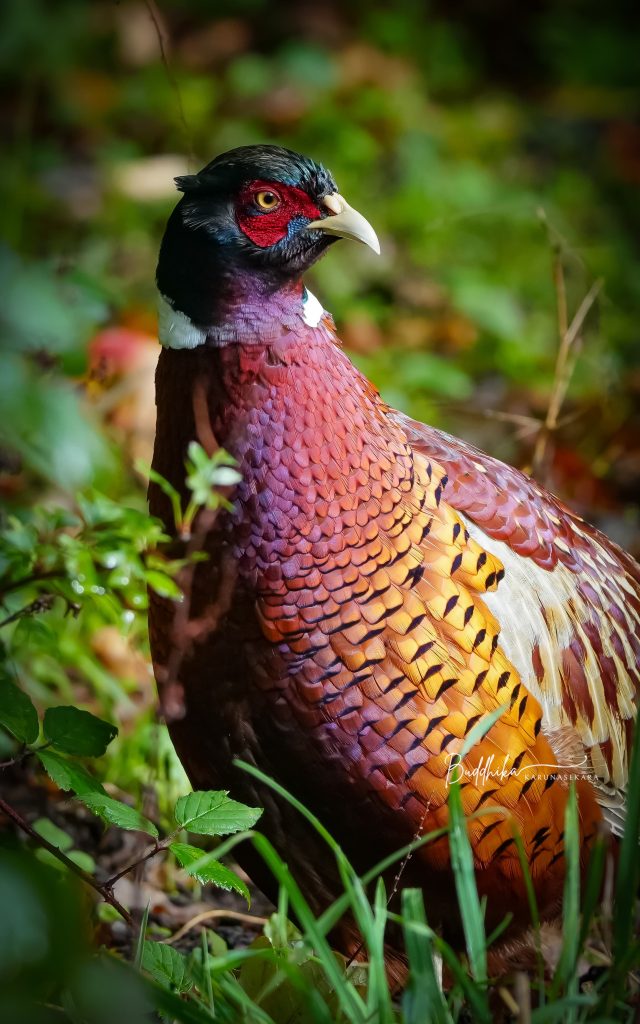
Strutting through autumn fields, their copper feathers gleaming in the low sun, pheasants have long been more than mere game birds. These dazzling creatures, with their long tails and vibrant plumage, have woven themselves into the tapestry of human culture, sparking tales and traditions across the globe.
From misty Chinese mountains to the hedgerows of rural Britain, pheasants have captured our collective imagination, becoming symbols of nobility, beauty, and the mystical in countless folktales and legends. Their presence in myth and story is as rich and varied as their striking appearance.
In Chinese mythology, the pheasant holds a special place. It’s associated with the Empress, symbolising virtue and beauty. The bird is also linked to the phoenix, representing rebirth and good fortune. Chinese art often depicts pheasants in tranquil garden scenes, embodying peace and prosperity.
Greek mythology connects the pheasant to the Argonauts’ quest for the Golden Fleece. Legend has it that the Argonauts brought these exotic birds back from the land of Colchis, introducing them to the Western world.
In European folklore, particularly in Britain, pheasants were seen as royal game birds. Their presence in medieval tapestries and heraldry signified nobility and the rights of the aristocracy to hunt on vast estates. The sound of a pheasant’s wings bursting from the undergrowth has startled many a woodland wanderer, perhaps contributing to their mystical reputation.
Native American legends sometimes feature pheasants as tricksters or symbols of vanity due to their showy appearance. In some tales, the pheasant’s beautiful feathers are a reward for kindness or wisdom, teaching moral lessons through the bird’s transformation.
Japanese folklore portrays the pheasant as a messenger of the gods, often appearing in Shinto legends. The bird’s distinctive call is sometimes interpreted as a harbinger of news, its voice carrying whispers from the spirit world to mortal ears.
In modern times, the pheasant continues to inspire. It remains a popular subject in art and literature, often symbolising the untamed beauty of the natural world. Its image graces everything from country pub signs to high fashion, a testament to its enduring appeal.
From ancient myths to contemporary symbolism, the pheasant’s legacy in folklore is as colourful and varied as its feathers. These birds remind us of the enduring connection between nature and human imagination, a living link to our ancestral stories and the wild spaces we once roamed freely.