
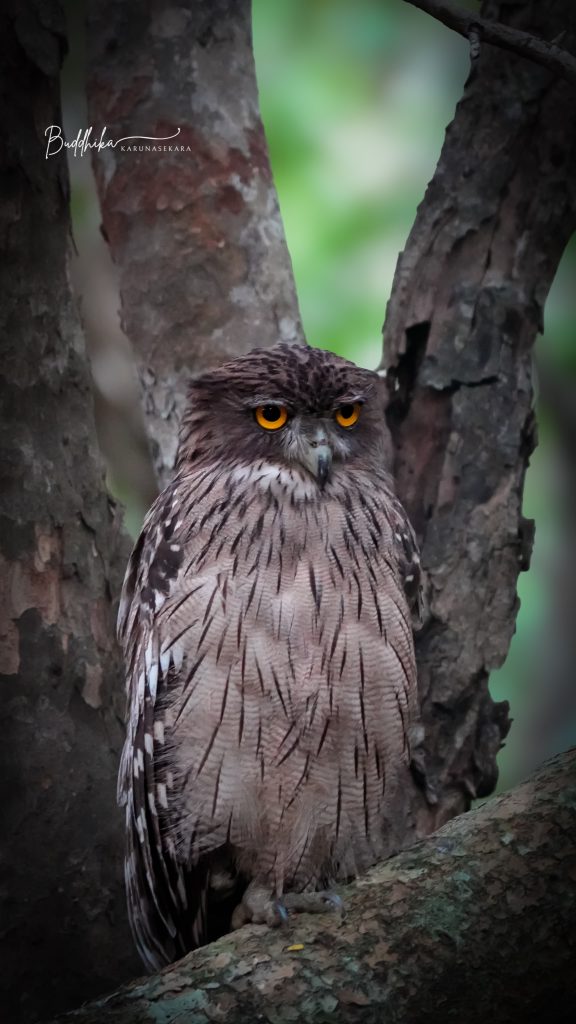
From the ancient riverbanks of India to the forested temple groves of Sri Lanka, from Himalayan foothills to the deep wetlands of Southeast Asia, Brown Fish Owls have stood quietly at the edges of human imagination.
These large, amber-eyed owls, with their shaggy ear tufts and powerful talons adapted for fishing, have not only haunted the water’s edge but also slipped into centuries of local stories, folktales, and spiritual beliefs.
In Indian folklore, the Brown Fish Owl is a creature of twilight, a watcher between worlds where land meets water. Along rivers like the Ganges and Narmada, stories describe these owls as guardians of hidden knowledge. Their eerie, low-pitched calls drifting over dark water are believed by some to be the voices of restless spirits, warning fishermen of approaching danger or guiding them to safe currents.
In parts of Odisha and West Bengal, rural stories speak of the Brown Fish Owl as a cursed fisherman. According to legend, a man who disrespected the river’s spirit by taking more than his fair share of fish was transformed into the owl, condemned to watch the water forever, always hungry. This gives the bird a dual reputation, both feared as a bad omen and respected for its connection to the river’s moods.
Sri Lanka’s temple folklore also includes the Brown Fish Owl, especially near ancient shrines set deep in forests or close to sacred ponds. Some traditions say these owls are spiritual messengers sent by protective deities to test the intentions of visitors. An owl calling near a temple entrance can be seen as a spiritual warning, especially if the visitor’s purpose is not pure.
Among the Tharu people of Nepal, Brown Fish Owls are connected to stories of survival during drought. One folktale recounts how ancestors followed the mournful cry of a fish owl to discover a hidden spring deep in the forest, a water source that saved their village. To this day, some water-related ceremonies include offerings made at old owl perches as a mark of gratitude.
Even in practical, everyday life, the Brown Fish Owl plays a role in traditional knowledge. In some fishing communities of southern India, fishermen observe the owl’s hunting habits to predict weather and fish behaviour. If the owl starts hunting unusually early in the evening, it signals that rough weather is coming. If the owl sits silently watching, the waters are expected to stay calm and the night’s catch will be good.
Unlike the smaller, woodland owls that appear in many European superstitions, the Brown Fish Owl belongs to a rarer category of birds linked to night and wisdom and directly to water and its hidden powers. Its heavy flight, deep voice, and patient hunting make it a natural symbol of knowledge and warning, a creature that understands the secret language of rivers and lakes.
From sacred rivers to village ponds, the Brown Fish Owl still watches the water, holding its place in the stories of those who live at the water’s edge. Whether as a spiritual guide, a whisperer of fate, or a weather prophet, this owl’s presence reminds us that water is never just water. It remembers, and so does the owl.