
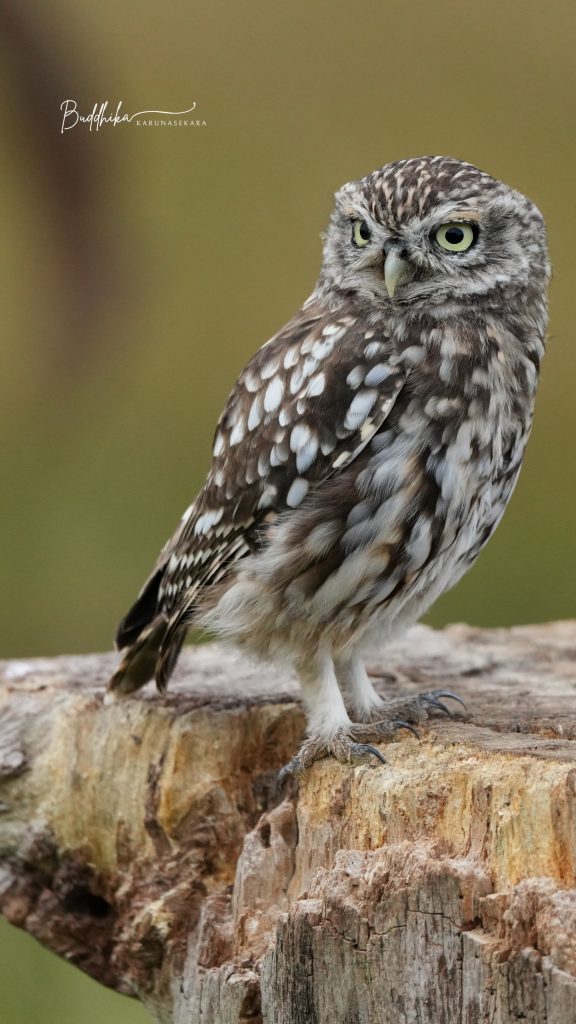
From the sun-drenched olive groves of Greece to the quiet hedgerows of rural England, from ancient Mediterranean myths to European farming traditions, Little Owls have perched in the stories of human culture for thousands of years. These small, wide-eyed owls, with their piercing gaze and bold, upright stance, weave through folklore as symbols of wisdom, mystery, and even omens.
In ancient Greece, the Little Owl stood beside Athena, goddess of wisdom and strategy. Known as glaux, this owl became a living emblem of intellect and foresight, perched upon Athena’s shoulder in art and coinage. The Greeks believed the owl’s nocturnal sight pierced the veil of darkness, granting clarity beyond human perception. Its presence on the battlefield was seen as a divine blessing, a sign that Athena watched over her warriors.
Roman culture inherited this reverence but with a twist. While the Little Owl still symbolised knowledge, it also gained associations with prophecy and death. Romans believed the owl’s eerie call foretold imminent death, particularly for prominent figures. Stories spread of Little Owls haunting the homes of emperors before their demise, blending the bird’s wisdom with an air of unsettling foresight.
In rural parts of Italy and Spain, Little Owls became creatures of mixed fortune. Farmers respected them as natural pest controllers, ridding fields of mice and insects. However, their calls at night were sometimes feared as ill omens, whispering secrets from the spirit world to those who could understand. In some villages, it was said that a Little Owl calling from the rooftop was announcing a soul’s departure.
British and Northern European folklore paints the Little Owl in a gentler light. Though a late arrival to Britain, introduced in the 19th century, the species quickly earned a place in local lore. Seen perched on barn beams or stone walls, Little Owls became symbols of watchfulness and rural wisdom. Their small size and bold daytime presence gave them a reputation as plucky guardians of farmyards, watching over fields and livestock with unblinking vigilance.
In parts of Germany and the Netherlands, Little Owls were thought to guide lost souls or protect travelers at night. Folktales tell of these owls appearing to lone wanderers, offering safe passage through dark forests and fog-shrouded paths. Their habit of nesting in old orchards and hollow trees also tied them to stories of hidden treasures and forgotten wisdom buried deep in the earth.
Even today, the Little Owl continues to straddle the line between the earthly and the mystical. Its steady gaze and bold demeanor seem to hold ancient knowledge, reminding us that even the smallest creatures can loom large in human imagination.