
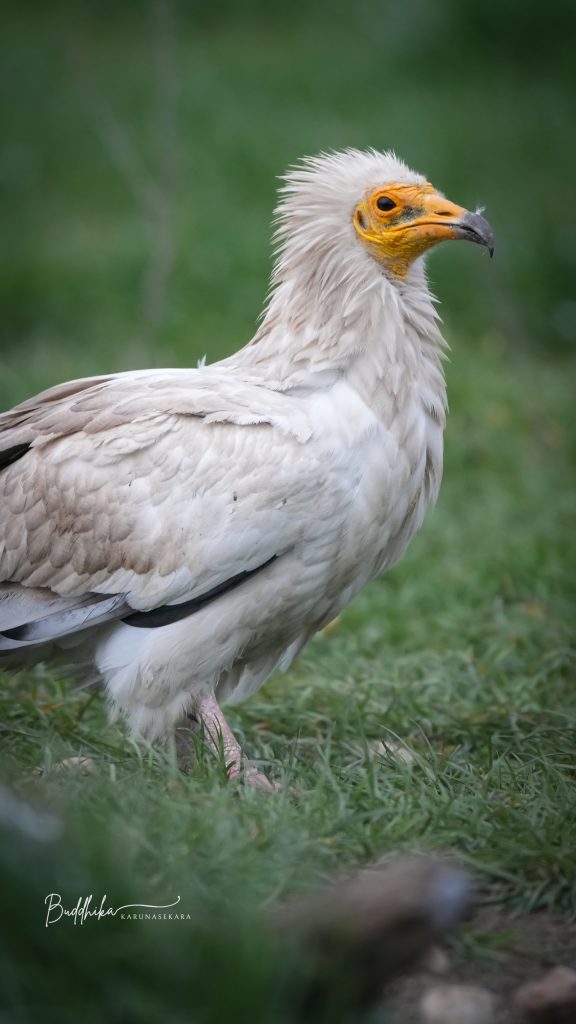
From the arid landscapes of North Africa to the rocky hills of southern Europe, from ancient Egyptian temples to Mediterranean shepherds’ tales, the Egyptian Vulture has soared through human folklore for millennia. These striking birds, with their white plumage, yellow faces, and elegant flight, have captured the imagination of cultures past and present, embodying themes of intelligence, renewal, and divine favour.
In ancient Egypt, the Egyptian Vulture, known as râgâ, was revered as a sacred bird. Its name was closely associated with the goddess Nekhbet, the vulture-headed deity who protected the pharaoh and symbolised maternal care. This vulture was seen as a purifier, a bird that cleaned the land by consuming carrion, transforming death into sustenance. Hieroglyphs often depicted the Egyptian Vulture, its image representing both motherhood and protection, reinforcing its status as a divine messenger.
Greek and Roman mythology also paid homage to this remarkable bird. The Greeks admired the Egyptian Vulture for its ingenuity, particularly its use of stones to break open tough eggs—a rare example of tool use in the animal kingdom. This behaviour led to legends of the vulture as a creature of great wisdom, capable of solving problems where others failed. The Romans, meanwhile, believed that vultures were linked to prophecy and the gods. The founding myth of Rome tells of Romulus and Remus using the flight of vultures to determine the site of their new city, a practice rooted in ancient augury.
Across North Africa and the Middle East, Egyptian Vultures have long been seen as birds of good fortune. In rural communities, their presence was welcomed, as they kept villages clean of waste and disease. Some Berber and Bedouin tales tell of the vulture as a guardian spirit, watching over nomads as they crossed vast deserts. To kill one was considered deeply unlucky, bringing misfortune to an entire settlement.
In parts of southern Spain and the Balkans, folk stories speak of the Egyptian Vulture as a bringer of renewal. Some traditions held that these birds carried the souls of the dead to the heavens, ensuring a peaceful journey to the afterlife. Shepherds and farmers respected them as omens of change. When the vultures returned from migration, they signalled the arrival of warmer weather and the start of new agricultural cycles.
Despite its revered status in folklore, the Egyptian Vulture has faced modern threats, with populations declining due to poisoning and habitat loss. However, conservation efforts and a growing appreciation for the bird’s ecological role continue to inspire new narratives. Even today, the Egyptian Vulture remains a symbol of resilience, intelligence, and the delicate balance between life and death.
Its legacy, woven into myths and traditions across continents, reminds us that nature’s most unassuming creatures often carry the weight of ancient wisdom, soaring beyond time and borders.