
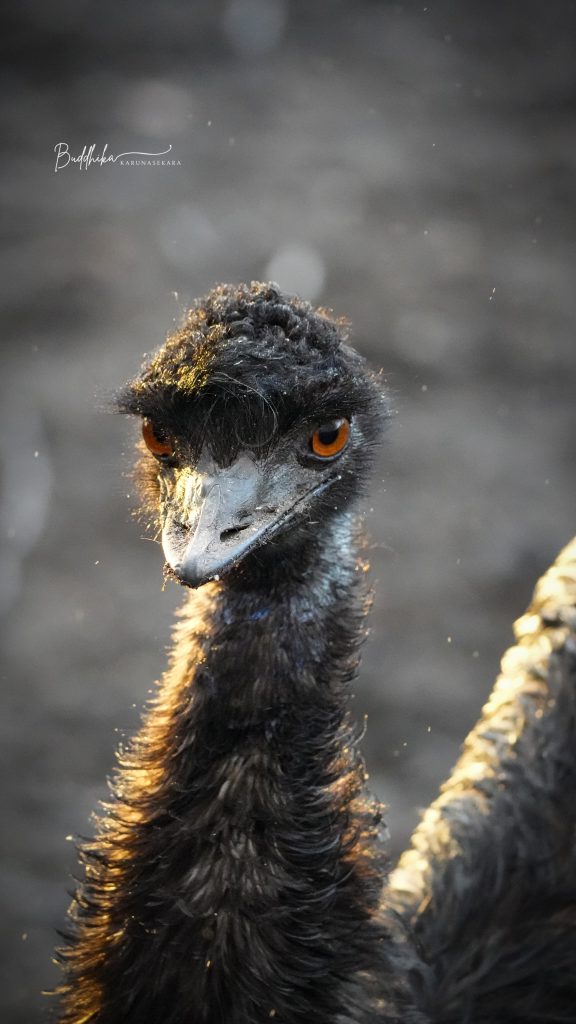
Across the red sands and saltbush plains of Australia, the emu strides with quiet purpose. With powerful legs and a gaze like stone, it is the continent’s largest bird, flightless yet far from grounded in spirit. The emu does not turn back. Its long, rhythmic stride has carried it across story, survival and nationhood.
In Aboriginal Dreaming stories, the emu is one of the great creators. In some traditions, its footsteps carved valleys and riverbeds, its feathers seeded the stars. The Yolŋu people of Arnhem Land tell of the Emu Spirit as a sky-dweller, shaping constellations and guiding the seasons. In the night sky, the dark shape of the Emu in the Sky, traced through the Milky Way’s dust clouds, is a celestial reminder of its presence above and below.
To many First Nations communities, the emu is also a teacher. Its movements signal change in season, its nesting behaviour speaks to cycles of care and protection. Male emus, who brood and rear the chicks, are symbols of paternal strength and quiet guardianship. Their stillness during incubation is seen not as passivity but deep, intentional patience.
To early settlers, the emu appeared strange, even prehistoric. It could not fly, yet it moved like a shadow across the land, vanishing into heat and haze. Though hunted and misunderstood, the emu persisted. Its place on the Australian coat of arms, alongside the kangaroo, is no accident. Neither animal walks backwards, a fitting metaphor for a nation built on motion, challenge and change.
In contemporary Australia, the emu is both emblem and enigma. It appears in logos, coins and national campaigns, yet still keeps to the margins. It reminds us that some of the most enduring symbols of identity are those that remain untamed. In outback towns and remote highways, sightings of wild emus are still met with awe and quiet respect.
To naturalists, the emu is a study in endurance. It can run at speeds over 50 kilometres per hour, go weeks without food, and cross great distances with minimal water. Its feathers, adapted for the sun’s glare, shimmer with earthy hues. Its booming calls echo across open country, a sound felt as much as heard.
Whether carving tracks through dust or pausing to watch from the scrub, the emu stands as a symbol of resilience, rhythm and quiet authority. It is a keeper of movement and memory, rooted in the oldest stories and still walking forward.