
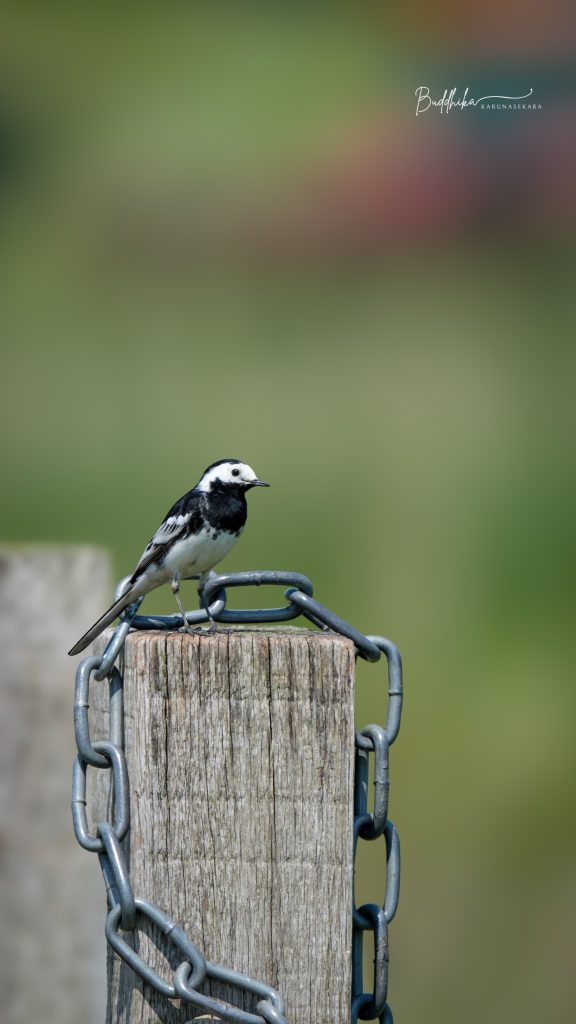
Darting along riversides, car parks and village greens with a flick of its tail and a flash of monochrome feathers, the pied wagtail is a familiar presence across the British Isles. With its elegant black-and-white attire and near-constant motion, it carries an energy that belies its size. A bird never still, it moves with rhythm and confidence through both wild and urban spaces.
In Celtic and British folklore, wagtails have long been seen as bringers of good fortune and cheerful omens. Their ceaseless wagging was once believed to “wag in the good luck,” especially when spotted near home or hearth. In parts of Wales and Cornwall, the sight of a pied wagtail on your doorstep is said to signal the arrival of guests or a turn in fortune.
Their presence near water has also tied them to spiritual renewal. In Irish tradition, wagtails were thought to ferry messages between this world and the otherworld, dancing at the edges of rivers where boundaries blur. Their tireless motion was viewed as a sign of vigilance, guiding the way between seen and unseen realms.
The wagtail’s distinctive tail bobbing gave rise to names like “dishwasher” and “washerwoman’s bird,” and in English folk rhyme, it was said they were scolding the earth for being too dirty. This playful energy earned the pied wagtail a place in children’s rhymes and seasonal superstitions, often linked to spring’s return and the end of long winters.
In modern times, the bird has adapted beautifully to life alongside people. It can be found chasing insects in city centres, nesting in industrial sites, and perching boldly on café tables and building ledges. To many, it has become a symbol of resilience and balance, a creature that walks between wildness and human presence with ease.
Always in motion, always aware, the pied wagtail remains one of the UK’s most beloved small birds. Its dance across puddles and pavements continues to inspire joy, reminding us that even in the busiest places, there is still room for nature’s rhythm.