
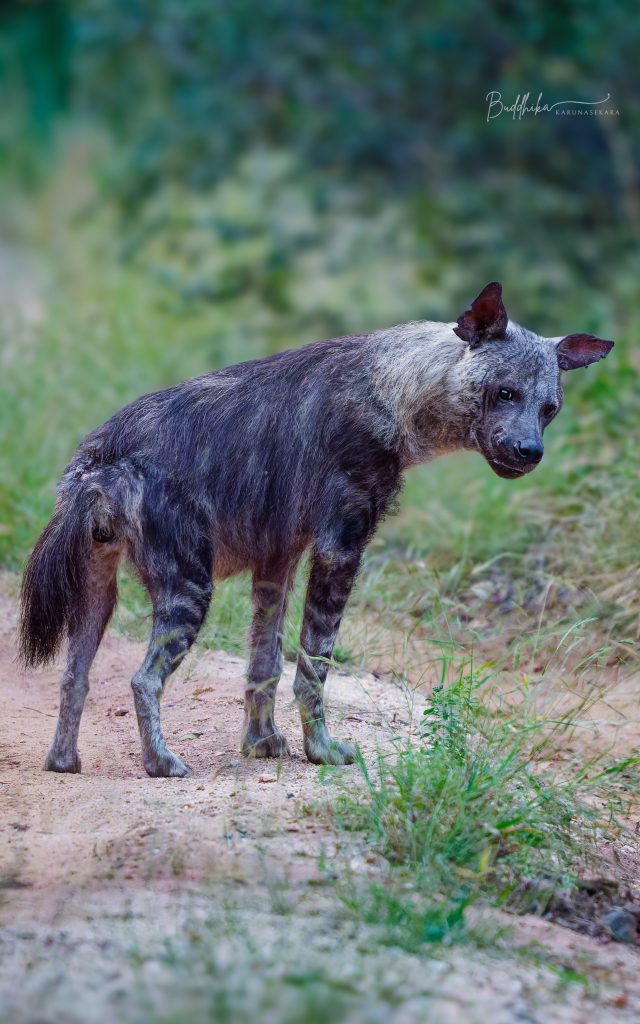
The brown hyena is one of Africa’s most elusive carnivores, inhabiting the arid landscapes of southern Africa, including Namibia, Botswana, Zimbabwe, Mozambique, and South Africa. Instantly recognisable by its long, shaggy dark brown coat, striped legs, and powerful jaws, it is perfectly adapted to life in deserts, semi-deserts, and dry savannahs. Although often thought of simply as a scavenger, the brown hyena is an opportunistic carnivore. While carrion makes up most of its diet, it also feeds on small mammals, birds, reptiles, insects, eggs, fruit, fungi, and other seasonal food sources, allowing it to survive in environments where food can be scarce.
Brown hyenas may live either as solitary nomads or as members of small family groups known as clans, which are centred around communal dens. These clans are generally much smaller and less hierarchical than those of the spotted hyena. Individuals may travel many kilometres each night in search of food, relying on an exceptional sense of smell to locate carcasses across vast landscapes. Their ability to survive in some of Africa’s harshest environments has made them one of the continent’s most resilient mammals.
Among the San people of southern Africa, hyenas have long occupied an important place in oral tradition, where they often represent human qualities or explain aspects of the natural world. Most traditional stories simply refer to “the hyena” rather than distinguishing between species. Within the brown hyena’s range, its secretive nature, nocturnal habits, and ability to survive in harsh environments have naturally contributed to its reputation as a patient and resilient survivor.
In parts of Namibia and Botswana, brown hyenas have traditionally been regarded with a mixture of respect and caution. Their nocturnal habits and haunting vocalisations meant they were often heard more frequently than they were seen. This gave rise to stories describing them as mysterious wanderers of the desert, appearing silently before disappearing once again into the darkness. Such beliefs reflected the difficulty of observing these secretive animals rather than any evidence of supernatural behaviour.
As with hyenas more generally, brown hyenas have occasionally been associated with the spirit world or with cautionary tales in some local traditions. These beliefs varied considerably between communities and usually referred simply to “hyenas” rather than distinguishing individual species. In many cases, the hyena served as a reminder that humans and wildlife shared the same landscape and resources, reinforcing the need for respect and vigilance when living alongside wild animals.
Unlike the spotted hyena, which has often been portrayed in folklore as loud, aggressive, or cunning, the brown hyena has generally occupied a quieter place in traditional stories. Its solitary appearance and preference for scavenging have given it a reputation as a patient observer rather than an active trickster. Some tales describe animals that survive through persistence and careful use of available resources, qualities that closely reflect the behaviour of the brown hyena itself.
Among pastoral communities, attitudes towards brown hyenas have sometimes been influenced by concerns over livestock. Although brown hyenas may occasionally prey on young or vulnerable domestic animals, scientific studies have shown that they rely heavily on carrion wherever it is available. This ecological role has often been overlooked, leading to persecution in some areas based on the assumption that they were responsible for more livestock losses than they actually caused.
Ecologically, the brown hyena is one of southern Africa’s most important scavengers. By consuming carcasses that might otherwise remain in the landscape, it helps reduce the spread of disease and recycles valuable nutrients back into the ecosystem. Its varied diet also makes it an important seed disperser for some plant species, demonstrating that even dedicated scavengers can contribute to maintaining healthy ecosystems in unexpected ways.
Today, the brown hyena remains one of Africa’s least understood large carnivores. Its secretive nature means it is rarely encountered, even in places where it is relatively common. Modern research has revealed an intelligent, adaptable animal that plays a vital role in keeping desert and savannah ecosystems healthy. The folklore surrounding the brown hyena reflects the respect that many communities have long held for creatures capable of surviving in unforgiving landscapes. Rather than being defined by fear or superstition, the brown hyena stands as a symbol of resilience, patience, and the remarkable ability to adapt to some of the harshest environments on Earth.