
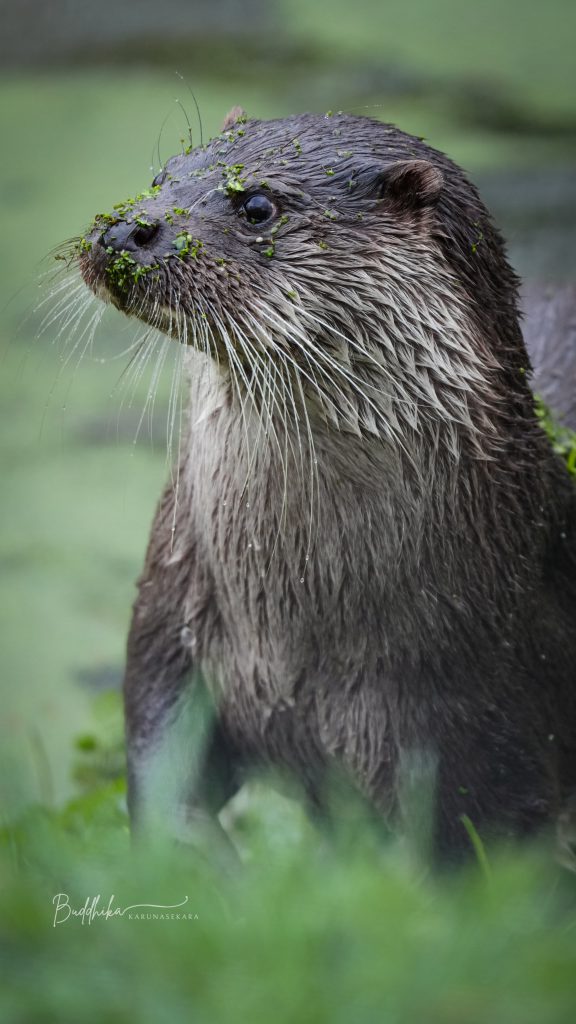
These charming semi-aquatic mammals have captured the hearts of people around the world with their playful antics and endearing characteristics. With thirteen different species found globally, otters come in various sizes, from small river otters to larger sea otters. These fascinating creatures have made their mark in the natural world and left a lasting impression in folklore and literature.
In the United Kingdom, otters have been the subject of many intriguing tales and legends. One amusing suggestion is that the famous Loch Ness Monster sightings might be the result of otters swimming in a single file as a family group.
Otters also feature prominently in an ancient shamanic Welsh tale involving the sorceress Ceridwen and young Gwion. When Gwion accidentally gained knowledge from Ceridwen’s cauldron, he transformed into various creatures to escape her wrath. As he plunged into the river as a salmon, Ceridwen pursued him in the form of an otter, showcasing the otter’s prowess as a skilled and determined hunter.
In Celtic and other folklore, the otter is often portrayed as a friendly and helpful creature, earning it the moniker ‘water dog’. The Irish story “The Voyage of Maelduin” tells of otters on the Island of Otter bringing salmon to the sailors, while “The Voyage of Brendan” recounts how an otter not only brought fish to a hermit but also collected firewood for him. Saint Cuthbert, the patron saint of otters, was said to have been warmed and dried by two otters after his nightly prayer vigils in the cold North Sea.
Interestingly, there was a debate among Celtic clerics about whether otter flesh should be classified as fish or meat, which determined if it could be consumed during Lent. The Carthusian monks of Dijon, who were forbidden to eat meat, considered otter a fish and thus allowed its consumption.
In Norse mythology, otters play a significant role in the story of Loki killing the dwarf Otr while the latter was in the form of an otter. The incident led to the gods compensating the dwarves with an otter skin filled with gold.
Otters have also made their mark in more recent literature. In Kenneth Graham’s “Wind in the Willows”, Otter is an affable character with an adventurous son. Henry Williamson’s moving tale “Tarka the Otter” follows the life of an otter in the rivers of North Devon, capturing the hearts of readers. Gavin Maxwell’s “Ring of Bright Water” is a touching and sometimes tragic true story of his friendship with otters, offering a lyrical portrayal of their intelligence and irrepressible playfulness.
Otters, with their endearing nature and rich presence in folklore and literature, continue to captivate people around the world. As we learn more about these remarkable creatures and their importance in our ecosystems, we can appreciate the stories and legends that have grown around them, celebrating the otter as a symbol of playfulness, intelligence, and the unbreakable bond between humans and the natural world.