
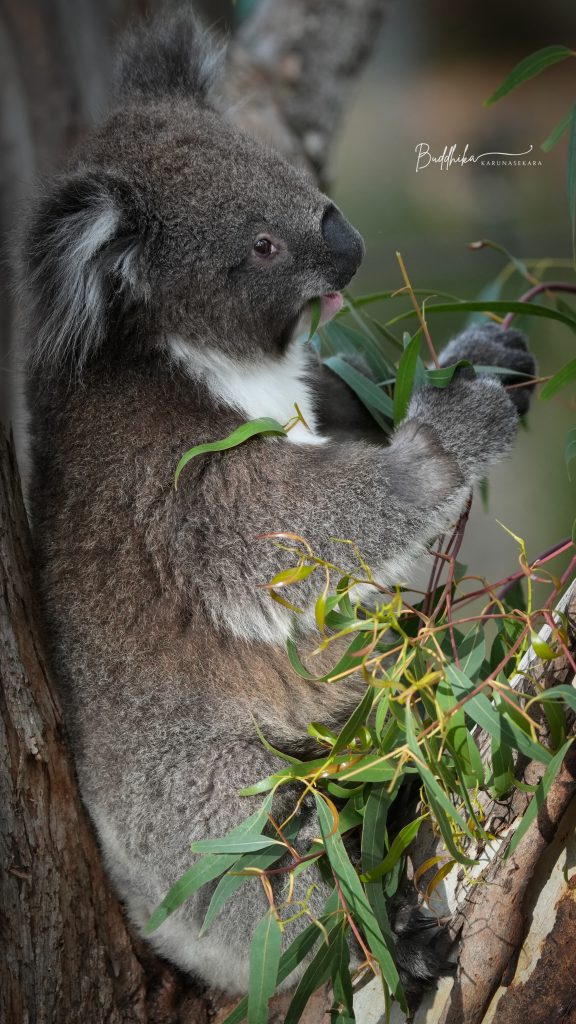
Resting high among the branches of Australia’s eucalyptus forests, the koala is one of the country’s most recognisable and beloved animals. With its soft grey fur, rounded ears, broad nose, and unhurried movements, it has become an enduring symbol of Australia’s unique wildlife. Yet long before it appeared on postcards, stamps, and conservation campaigns, the koala held an important place in the cultural traditions of Aboriginal Australia.
Across many Aboriginal cultures, the koala appears in Dreaming stories that explain the origins of the landscape, the behaviour of animals, and the responsibilities people share toward Country. Although these stories differ greatly between First Nations peoples, the koala is often portrayed as a peaceful creature whose close relationship with the trees reflects patience, balance, and respect for the natural world. Rather than dominating its surroundings, it lives in harmony with the forest that sustains it.
In several traditional stories, the koala’s distinctive appearance is explained through acts of generosity or sacrifice. Some tales describe how the koala gave up physical strength or comfort to help other animals during times of hardship, leaving it with its familiar slow, deliberate way of life. Like many Dreaming stories, these accounts are less concerned with explaining biology than with teaching values such as cooperation, humility, and caring for the land.
The koala’s quiet existence has naturally encouraged people to see it as a symbol of calmness and reflection. Spending much of its life resting among the branches, it reminds observers that survival is not always achieved through speed or force, but through careful adaptation to the environment. Its specialised diet of eucalyptus leaves, toxic to most other animals, is one of nature’s most remarkable examples of evolutionary adaptation.
The koala also occupies a cherished place in modern Australian culture. Generations of children have grown up with Blinky Bill, the adventurous young koala created by Dorothy Wall. Through his adventures, Blinky introduced countless readers to Australia’s bushland, celebrating courage, friendship, and a love of the natural world while fostering an early appreciation for native wildlife.
Ecologically, koalas play an important role in Australia’s eucalyptus forests. By feeding selectively on leaves from a variety of eucalyptus species, they form part of the complex relationships that have evolved within these unique ecosystems over millions of years. Although they have few natural predators as adults, koalas are highly dependent on healthy, connected forests, making them particularly vulnerable to habitat loss, drought, and increasingly severe bushfires.
The devastating bushfires of recent years have transformed the koala into a global symbol of wildlife conservation. Images of injured and rescued koalas touched millions of people around the world, highlighting both the fragility of Australia’s native forests and the importance of protecting them for future generations.
Perhaps the koala’s greatest lesson lies in its quiet way of life. While other animals impress through speed, strength, or spectacle, the koala reminds us that resilience can also be found in stillness, patience, and living in balance with the world around us. High among the eucalyptus branches, it continues to embody a timeless connection between Australia’s ancient forests, its First Nations cultures, and the enduring hope that these remarkable landscapes will continue to thrive for generations to come.